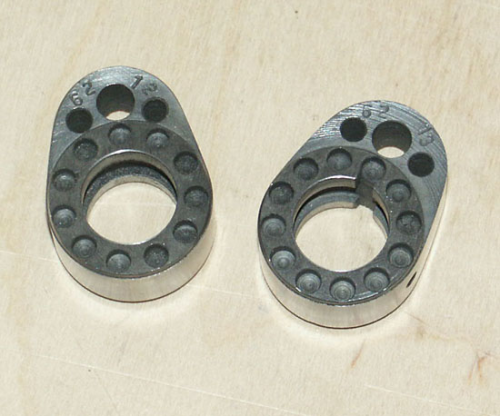
This listing is for a matched pair of Inlet and Exhaust cam to fit the 500cc International SOHC engine - with the profile of the original 500cc Internationl 62.12 (Inlet) and 62.13 (exhaust) cam profile - which was the type most commonly fitted to road going 500cc Internationals from the mid 1930's to mid 1950's. These cams are manufactured for us by a long established UK manufacturer to the original Norton (verniered) design. Each set comes with a useful fitting sheet
Back in Stock Feb 2025 - We have just had a new batch of these cams in stock, from our original cam maker whom we have used for the laast 20 years.
Backgrond Information:
These cams are to the original Norton SOHC 500cc International (Model 30) 62.12 and 62.13 profile and are suitable for all Model 30 road engines from the mid 30's onwards. They can also be retrospectively fitted to CS1 - although see our note further down this listing if you have a CS1 model.
However, we also offer the slightly more radical 500cc M30/Longstroke Manx Profile (see Item listing 0051) which many customers (myself included) also commonly fit into International engines.
There were numerous cam profiles fitted to SOHC Nortons over the many years the SOHC Arthur Carroll design engine was produced - i.e. 1930 to the late 1950's - and each cam was normally stamped with the particular inlet or exhaust profile on its sidewall. The profiles of 62.12 and 62.13 was probably the most common 500cc International profile though. (you can email me if you have a different profile and want to check - I have got details of a few of the others used).
However, if you own an earlier (Arthur Carroll) CS1 (i.e. pre-International), or a later CS1 (i.e. SOHC with non downdraught inlet tract) - or just want a 'softer' touring engine - it has worth bearing in mind that information I had been told many years ago was that the 350cc cams (our Item 0053) are a possible alternative - having similar cam timings, but slightly less lift.
And of course it should be remembered - that due to the general competition design of this engine (which were more for speed than long touring distances) - the cams on these models often get a lot of wear, due to the high thrust - it is not unusual to strip an original cambox to find the original cams have much of their original profile highly worn!! (and if that is the case - dont forget to test valve to piston clearance as part of the valve timing process - if fitting new cams!
These cams are manufactured for us by a highly experienced UK company, who have been making these cams for us for over 20 years. They are to the original Norton pattern - which includes the original vernier holes, so that the inlet cam can be 'pegged' to the exhaust cam (which is statically located to the camshaft with a woodruff key) with a special roller, in various pre-defined positions in relation to each other, therefore allowing a slight variation of valve timing between inlet and exhaust cams. We supply an information sheet with each set of cams that helps explain this. Note: the special roller that locates the two cams to each other is sold seperately - Item 0054 and we recommend having a couple spare - as very easy to drop and lose one on the floor when fitting . . . I have done that a few times!.
As a final note on this engine and cam timing design - along with the vernier holes on the upper camshaft bevel gear - which allow slight variation of timing of both cams in combination - results in a very flexible and highly adjustable means of setting the valve timing - remembering of course, that back in the 1930s - this engine was designed primarily for competition. However, the relative complexity of that design (compared to other machines of the period), alongside the also necessary shimming process necessary for the vertical bevel gear design - means that assembling an engine for the first time can seem quite daunting - and sometimes take many attempts to get right!
My only advice to help with this would be to say - be patient and methodic, and dont be disheartened if it takes multiple attempts to get the shimming and valve timing correct - most of us are the same, and although you get more familiar with the task - it is never totally easy, but worth it in the end!